

Article
7 Snow Blower Safety Tips
Follow these seven tips to safely operate a snow blower, and you'll quickly clear snow from your sidewalk and driveway.
Read More September 15, 2023 | Blain's Farm & FleetQuick answer: The right pressure washer depends on the job. For most residential tasks—driveways, decks, and siding—an electric pressure washer rated between 1,500 and 3,000 PSI handles the work reliably. For large properties, heavy staining, or frequent heavy-duty use, a gas-powered model in the 2,800–4,400 PSI range delivers the cleaning force needed. Match PSI and GPM to your specific tasks before you buy.
Spring rolls in across the Midwest, and the to-do list fills up fast. Driveways are caked with road salt. Decks are gray from months of rain and ice. Siding is streaked with algae and dirt. A pressure washer cuts through all of it faster and more thoroughly than a garden hose ever could—but only if you pick the right one.
The options on a store shelf can be confusing. Electric or gas? High PSI or high GPM? What attachments actually matter? These are reasonable questions, and the answers depend almost entirely on how you plan to use the machine.
Blain’s Farm & Fleet carries a wide range of pressure washers suited to Midwest homeowners and small-property owners. The staff at your local store understands the seasonal demands that come with this region—road salt, freeze-thaw cycles, spring and fall cleanup—and can help you match the right machine to your actual needs.
A pressure washer is a motorized pump that forces water through a narrow nozzle at high velocity. That concentrated stream strips away dirt, mold, algae, oil, and salt residue from surfaces that a standard hose cannot clean effectively.
Two specifications define a pressure washer’s cleaning ability:
Both numbers work together. To calculate actual cleaning power, multiply PSI by GPM. A machine with 2,500 PSI and 2.0 GPM produces a cleaning power of 5,000—more effective than a 3,000 PSI unit with 1.5 GPM, which lands at 4,500.
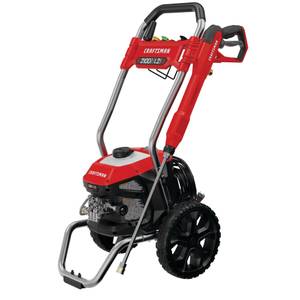
Electric pressure washers use a plug-in motor to drive the pump. They are quieter, lighter, and lower maintenance than gas models. Most electric units fall in the 1,500–3,000 PSI range, making them a solid fit for typical residential jobs: cars, outdoor furniture, patios, decks, and standard driveways.
Because they require a power outlet, range is limited by cord length. They produce no exhaust fumes, which also makes them usable in enclosed or semi-enclosed spaces.
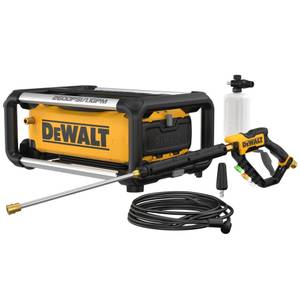
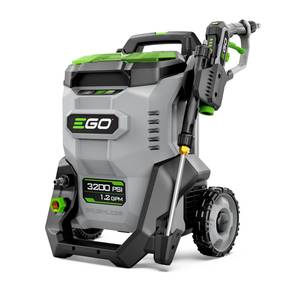
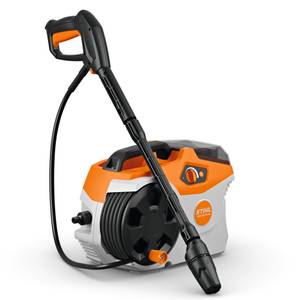
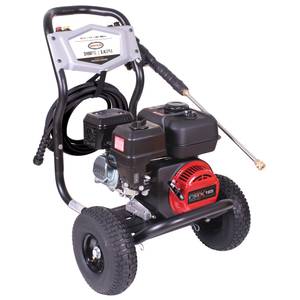
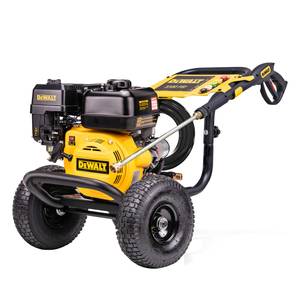
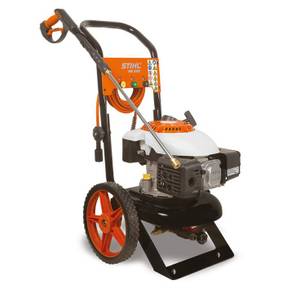
Gas-powered pressure washers run on a small gasoline engine. They generate more PSI and GPM than comparably priced electric models, making them better suited for large driveways, paint prep, stripping oil stains, and cleaning commercial-grade surfaces. Gas units are fully portable—no cord, no outlet needed—which matters when working far from the house.
The tradeoffs are real: gas machines are heavier, louder, and require regular maintenance including oil changes, air filter checks, and fuel stabilization before storage. They must be used outdoors due to exhaust emissions.
|
Duty Level |
PSI Range |
Common Uses |
|---|---|---|
|
Light |
1,000–1,900 |
Cars, bikes, patio furniture, grills |
|
Medium |
1,900–2,800 |
Decks, fences, house siding |
|
Heavy |
2,800–3,300 |
Concrete driveways, walkways, oil stains |
|
Extra Heavy |
3,300+ |
Paint stripping, commercial surfaces |
Start by listing the surfaces you plan to clean most often. A unit appropriate for washing a car (1,200–1,900 PSI) is not appropriate for removing embedded salt and oil from concrete (2,800–3,300 PSI). Buying too little power means repeating passes without results. Buying too much means risking surface damage on wood, siding, or pavers.
As a practical reference:
If you have a standard suburban property with outlets accessible from the garage or exterior walls, an electric pressure washer covers most needs without the added complexity of a gas engine. If you manage a larger lot, farm buildings, a long gravel driveway, or need to clean equipment far from a power source, a gas model is worth the added maintenance.
Electric pressure washers are generally more affordable to buy and operate. Gas models cost more upfront and require ongoing fuel and maintenance. That said, a gas machine used properly will outlast several budget electric units on demanding jobs. Think about frequency of use as much as price. A homeowner who pressure washes twice a year needs a different machine than someone who runs it weekly.
|
Feature |
Electric |
Gas |
|---|---|---|
|
Typical PSI Range |
1,500–3,000 |
2,800–4,400+ |
|
Portability |
Cord-dependent |
Fully portable |
|
Noise Level |
Low to moderate |
High |
|
Maintenance |
Minimal |
Oil, fuel, spark plugs |
|
Suitable For |
Residential, light-medium duty |
Heavy duty, large areas |
|
Environmental Impact |
No emissions |
Exhaust fumes |
|
Initial Cost |
Lower |
Higher |
|
Operational Cost |
Low (electricity) |
Ongoing fuel cost |
Choose an electric pressure washer if you’re cleaning a standard residential property, want low maintenance, and use the machine seasonally.
Choose a gas pressure washer if your jobs are large-scale, heavily soiled, or if you need to work far from a power source regularly.
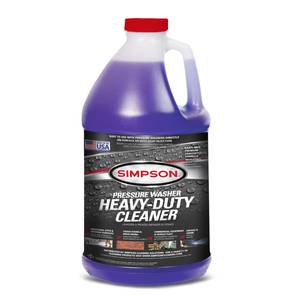
The machine itself is only part of the setup. A few key attachments make a significant difference in results:
Nozzles are color-coded by spray angle. Angle determines how concentrated—or how wide—the spray pattern is.
Pressure washers operate with enough force to cause serious injury. The spray stream at close range can cut skin. At any range, it can strip paint, damage wood grain, and dislodge mortar. Before starting:
Midwest driveways, walkways, and siding face a specific set of challenges. Road salt, calcium chloride, and magnesium chloride—the deicers used across Illinois, Wisconsin, Iowa, and neighboring states—penetrate concrete pores. During freeze-thaw cycles, trapped moisture expands, causing scaling and surface deterioration over time.
The best time to pressure wash in the Midwest is early spring, once daytime temperatures stay consistently in the 40s and road salt applications have ended. Washing at this point pulls chlorides off the surface before warmer temperatures drive them deeper. A second wash in late summer clears mold, algae, and general seasonal grime.
Storing your pressure washer for winter:
Using too much pressure for the surface: High PSI on the wrong material—wood decking, pavers, soft brick—causes permanent damage. Always start with a lower pressure setting or wider nozzle, then adjust.
Skipping the pre-soak: Running high-pressure water over dry oil stains or heavy grime pushes it around rather than lifting it. Pre-treating with a degreaser and letting it sit for 10–15 minutes makes a measurable difference in results.
Holding the wand too close: A safe starting distance is 12–24 inches from the surface. Moving closer concentrates force and risks etching or damaging what you’re trying to clean.
Washing in direct sunlight: Detergent dries before you can rinse it, leaving residue behind. Work early in the morning or on overcast days.
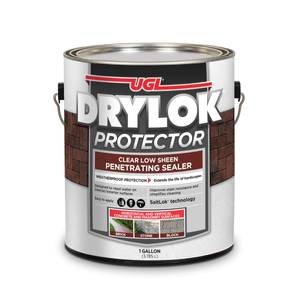
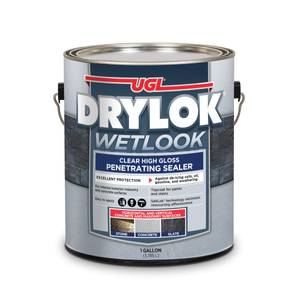
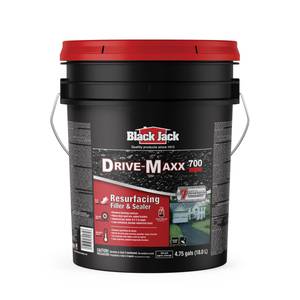
Not letting surfaces dry before sealing: Applying concrete sealer to a damp driveway traps moisture underneath and causes the coating to fail. Wait 24–48 hours after washing before applying any sealer.
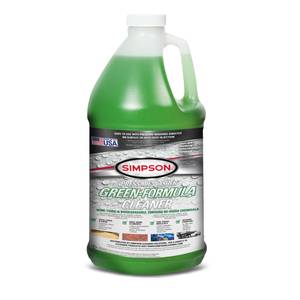
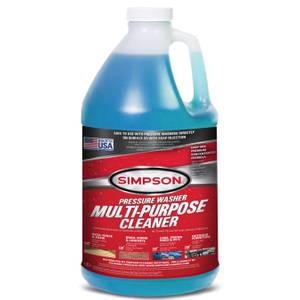
Blain’s Farm & Fleet stocks pressure washers across a range of performance levels—from compact electric units suitable for vehicle and furniture cleaning to gas-powered machines built for driveways, decks, and larger exterior surfaces. The selection includes matching accessories: surface cleaners, nozzle sets, extension wands, detergents, and pump protectors.
Staff at Blain’s local stores are familiar with the specific conditions Midwest homeowners deal with each season. Whether you’re trying to choose between two machines on the shelf, troubleshoot why your current unit isn’t performing, or figure out what cleaning solution to use on your particular surface, the staff can give you a direct answer based on practical experience—not a manufacturer’s brochure.
A pressure washer rated between 2,500 and 3,000 PSI is appropriate for most residential concrete driveways. For heavily stained surfaces, accumulated oil, or large areas, 3,000–4,000 PSI provides more effective results. Avoid sustained use above 4,000 PSI on residential concrete, as excessive force can etch or pit the surface permanently.
Yes, for most residential driveways. Many electric models now reach 2,500–3,000 PSI with adequate GPM for effective concrete cleaning. If your driveway has heavy oil stains, covers a large area, or hasn’t been cleaned in several years, a gas model in the 3,000+ PSI range will work faster and more thoroughly.
PSI measures the force of the water stream; GPM measures how much water flows through per minute. Both matter. High PSI cuts through grime; adequate GPM rinses it away. Multiply the two numbers together to get cleaning power (CU). A unit with 2,500 PSI and 2.5 GPM (6,250 CU) will outperform a 3,000 PSI unit with 1.5 GPM (4,500 CU) on most surfaces.
Yes. Use a pressure washer rated between 1,200 and 1,900 PSI for vehicle washing. Use a wide-angle nozzle (25° or 40°) and keep the spray tip at least 12–24 inches from the surface. Avoid using high-pressure or zero-degree nozzles on painted panels, trim, or window seals.
Drain or stabilize the fuel in the tank and carburetor. Run the engine until it stalls from fuel starvation, or add a fuel stabilizer and run the engine for several minutes to circulate it. Drain all water from the pump and hoses. Use a pump protector product to lubricate internal seals and provide antifreeze protection. Store the unit in a dry location protected from freezing temperatures.
Start with the 40-degree white nozzle for wood surfaces. It delivers a wide, lower-impact spray that cleans without raising grain or splintering the surface. Keep the wand moving consistently and maintain at least 12 inches of distance. Avoid the 15-degree yellow or 0-degree red nozzle on wood.
Most pressure washers last between 5 and 10 years with proper maintenance. Electric models tend to require less upkeep, while gas models are built for heavier use but need regular attention—oil changes, spark plug checks, and proper seasonal storage. Draining water from the pump before winter storage is one of the most effective ways to extend the life of any pressure washer.
Early spring, once daytime temperatures consistently hold above 40°F and road salt applications have stopped. This timing removes chloride residue before warmer weather drives it deeper into the concrete. A second wash in late summer before fall is a practical maintenance schedule for most Midwest homeowners.
Picking a pressure washer isn’t complicated once you know what to look for. Match the PSI and GPM to your actual tasks. Decide between electric and gas based on your property size, portability needs, and how often you plan to use the machine. Factor in the accessories—a surface cleaner alone dramatically improves results on flat concrete—and always use the right nozzle for the surface you’re cleaning.
The difference between a frustrating experience and a good one usually comes down to preparation: choosing the right machine, pre-treating surfaces before washing, and using proper safety gear. Done right, pressure washing extends the life of driveways, decks, and siding by removing the contaminants that break them down over time.
Blain’s Farm & Fleet carries the machines, accessories, detergents, and safety equipment to get the job done properly. Visit farmandfleet.com or your local store to browse options and talk with staff who understand what Midwest properties go through each season.