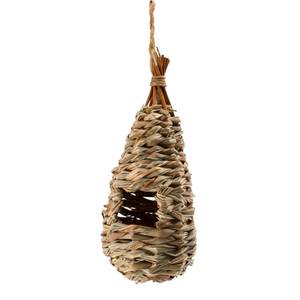
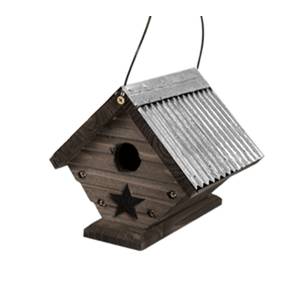
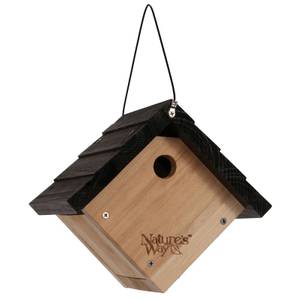
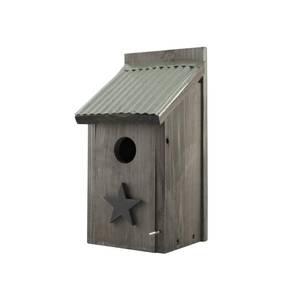
Are you thinking of inviting some feathered friends into your yard and giving them a place to call home? Setting up birdhouses around your yard is a great way to catch a rare glimpse of daily bird life. You can attract many backyard bird species, such as tree swallows, bluebirds, chickadees, titmice, house wrens, and nuthatches.
But purchasing a birdhouse isn’t just about adding a nice accessory to your outdoor space—it’s about creating a safe haven for birds to nest and raise their young.
Whether you’re an avid bird watcher or simply looking to contribute to wildlife conservation in your own small way, selecting the right birdhouse is very important. That’s why Blain’s Farm & Fleet is here to help you find the best birdhouse for your yard.
Material
Choose birdhouses made of wood or other thick materials. Using thicker materials helps the birds stay insulated against the colder weather.
You should pick a birdhouse without a perch attachment. In the wild, tree hole nests don’t have perches. A perch can actually endanger the birds who choose to nest in a birdhouse.
Perches can attract house sparrows to the nest. House sparrows, a non-native species, will attack the young offspring, even pecking them to death so they can take over the nest.
Entrance Hole Size
The size of the entrance hole is one of the most important things to keep in mind. The the most common hole-nesting birds can use a 1-1/2″ entrance hole. The birdhouses you buy or build should have an entrance hole of about this size.
This size also keeps out starlings, another invasive species that takes over nest boxes from native species. Small birds, such as chickadees and wrens, can use a house with a 1-1/4″ entrance hole.
Box Size
The inside dimensions of the box are also important. They should be at least 4″ x 4″. This will ensure there is room for baby birds to develop.
You must be able to open the box on either the side, front, or top. This helps in two ways. You can monitor the progress and health of the young, and you can clean out the box at the end of the season.
Ventilation
There should be some holes or slits near the top of the box for ventilation. This helps to let hot air out when the sun beats down on the box in summer. It is also useful to have some sort of drainage holes in the bottom of the box.
The roof should overhang the entrance hole. This both shades the entrance hole and keeps the rain out.
Location
Habitat is important to attract certain hole-nesting birds. Make sure the entrance of the house isn’t blocked in any way, so the birds can have a clear flight path. Place bluebird houses and tree swallow houses in open, mowed areas. Tree swallows especially like to nest near water.
Certain types of birds, such as chickadees, titmice, and nuthatches live in forests, so they prefer their houses somewhat near trees. House wrens nest in suburban settings and near edges of brush.
If you plan on putting up purple martin colonies, you will need to place them about 40 feet away from any objects, such as trees and buildings.
Mount nesting boxes about four to five feet high on a metal pole or post, facing any direction. Use a nest baffle, which will keep predators from climbing to the box.
Maintenance
To keep the birdhouse nice and healthy for future visitors, make sure you clean it at the end of the season. Typically, this will be in the fall.
Once you’re sure no birds are living in it anymore, remove any old nesting materials from the birdhouse. And wipe it clean of any other residue.
You can keep the birdhouse up through the winter if you’d like. However, that means you will likely need to clean it again before spring arrives. And other critters, such as mice, may try to sneak in.
Bird houses, as well as bird feeders and bird baths, are a great way to attract birds to your backyard. Using all three will give your birds an ideal habitat that you’ll enjoy as much as they do.
For more buying guides like this one, check out our other Wild Birds & Bird Watching articles.