Article
Avoid Poisonous Plants While Camping
Camping let's you explore all the wonders of nature, but you need to be careful. Learn how to identify poisonous plants while camping.
Read More July 29, 2015 | Blain's Farm & FleetAs the warmer months roll in, so do the mosquitos. It can be tricky to keep these pesky intruders at bay, especially if you don’t want to use harsh chemicals. But fortunately, we have a simple, natural solution for you! A 3-ingredient homemade mosquito repellent recipe!
You can make your very own mosquito repellent using just three ingredients. This method is not only effective but also safe for your skin and the environment. Plus, it’s super easy to whip up! Create a natural bug spray that will work for you and your family with this step-by-step guide from Blain’s Farm & Fleet.

Mosquitoes rely heavily on scent to locate their targets, tracking carbon dioxide, body heat, and the natural fragrances we emit. Certain plant-based ingredients produce aromas that interfere with that process, making it harder for mosquitoes to find you.
Unlike DEET-based sprays, natural repellents are a reasonable choice for everyday outdoor activities like backyard gatherings, camping, or a walk in the park. But in case you’re traveling to an area with a high risk of mosquito-borne diseases like Zika or malaria, a CDC-approved chemical repellent is the more appropriate option.
Not all essential oils perform equally. Here are the most effective options to choose from for your homemade repellent:
Avoid using any essential oil directly on the skin without diluting it first. Essential oils should always be mixed with a carrier liquid, which is exactly what this recipe does.
Before you begin making your natural bug spray, it’s important to understand why these ingredients are beneficial.
Water will act as the base of your DIY repellent. It will dilute the other ingredients to make them safe for your skin.
Apple cider vinegar has a strong scent that mosquitos don’t like, and it’s natural and safe to use on your skin. And certain essential oils are known for their mosquito-repelling properties. (see above)
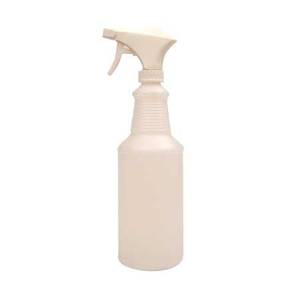
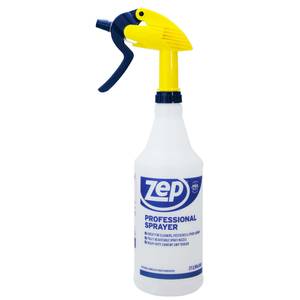
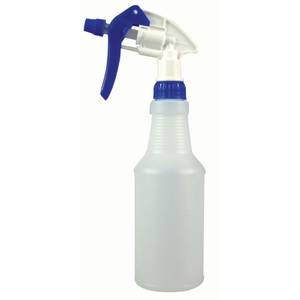
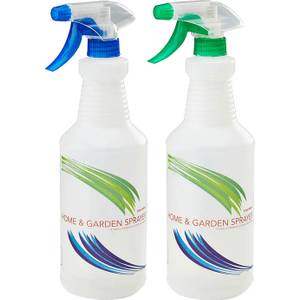
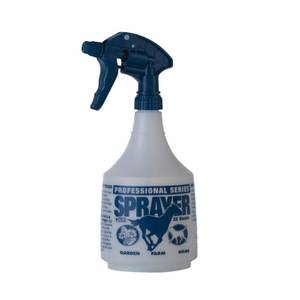
You’ll also need a clean spray bottle to store your repellent.

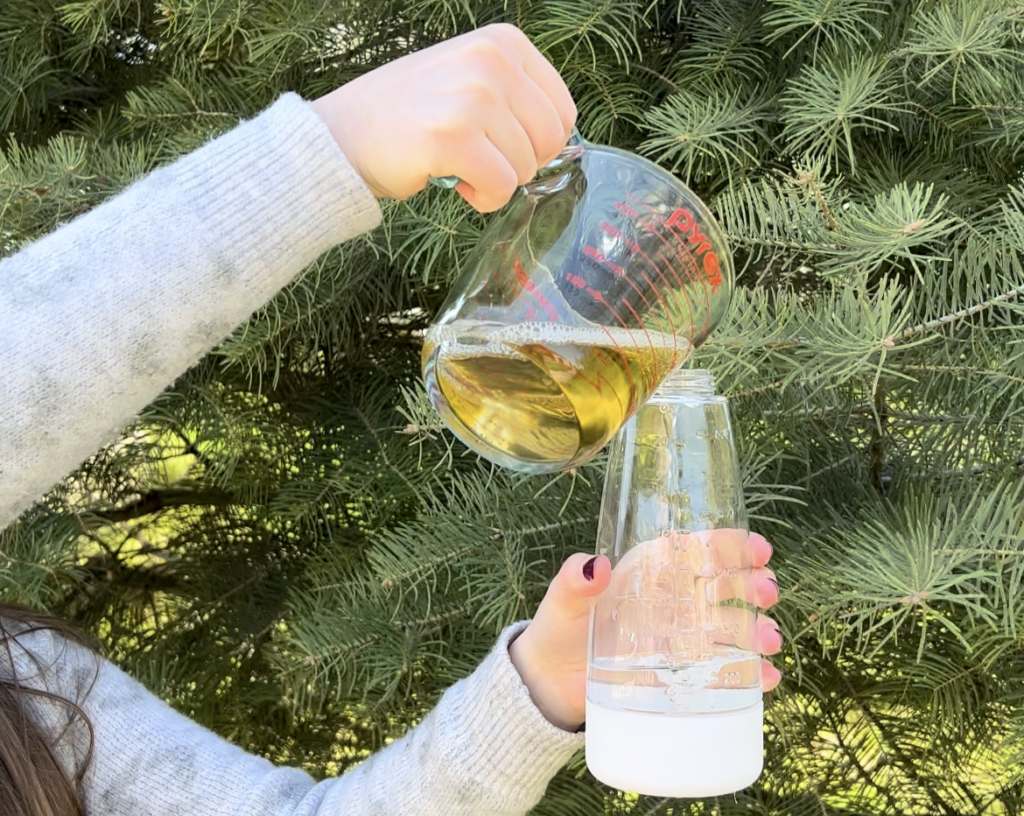
In your spray bottle, mix the water and apple cider vinegar. The equal parts ensure that the vinegar’s scent is potent enough to repel mosquitos without being overwhelming.
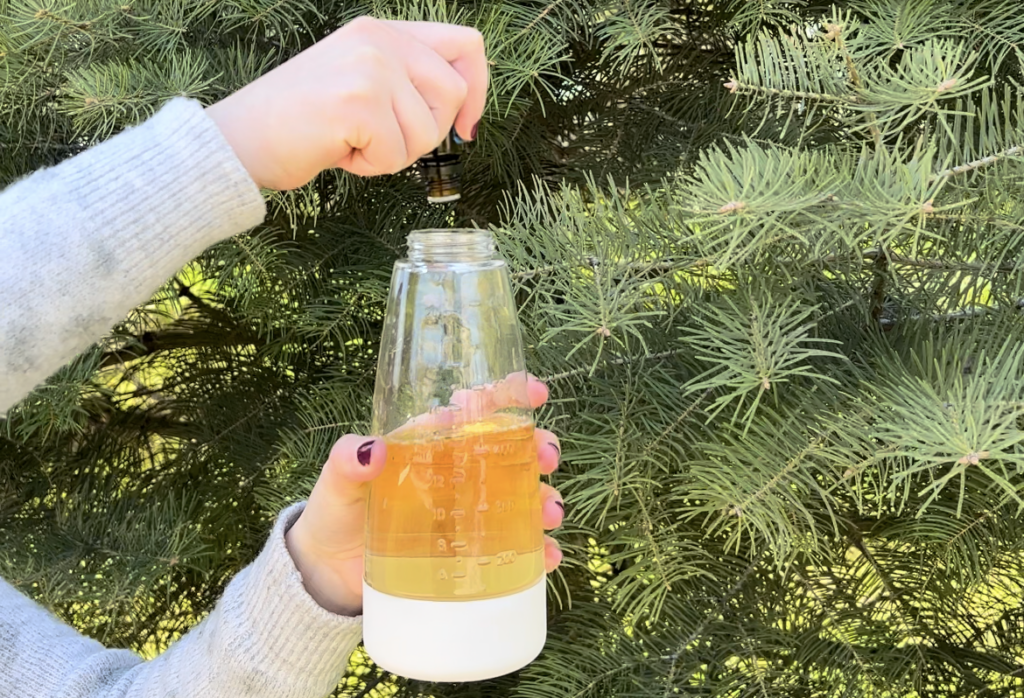
Add 10-15 drops of the essential oils of your choice. They’re effective for repelling mosquitos and will add a nice scent to the spray.
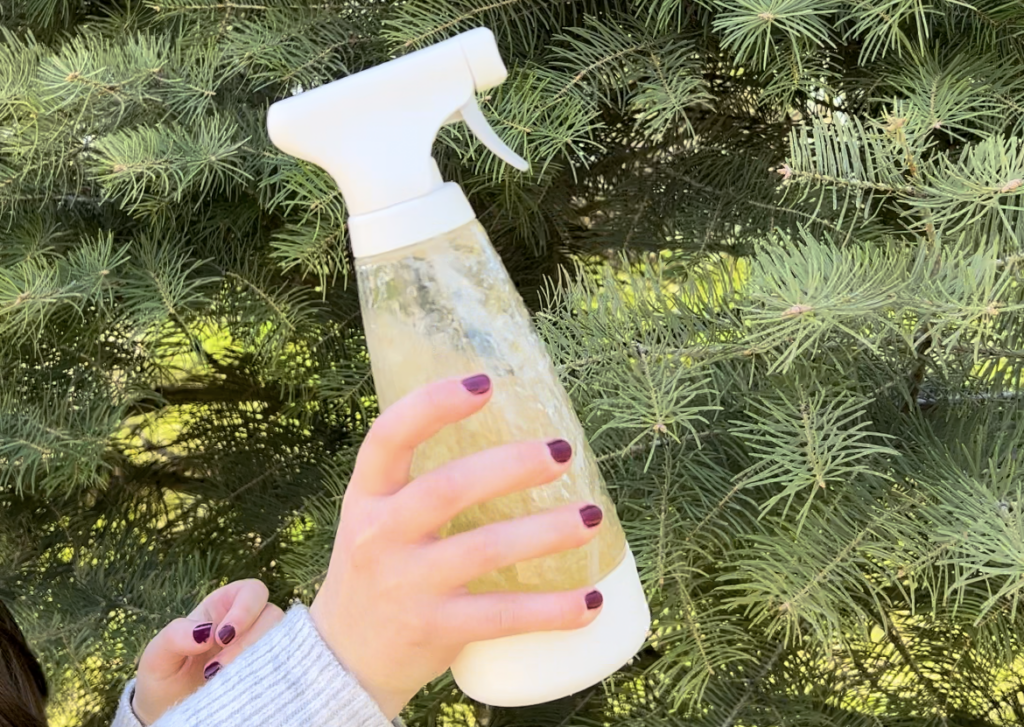
Secure the lid on your spray bottle, and shake it vigorously. This will ensure all the ingredients get thoroughly mixed.
Store your repellent in a cool, dark place to preserve its effectiveness. Use this homemade bug spray within one to two months for best results.
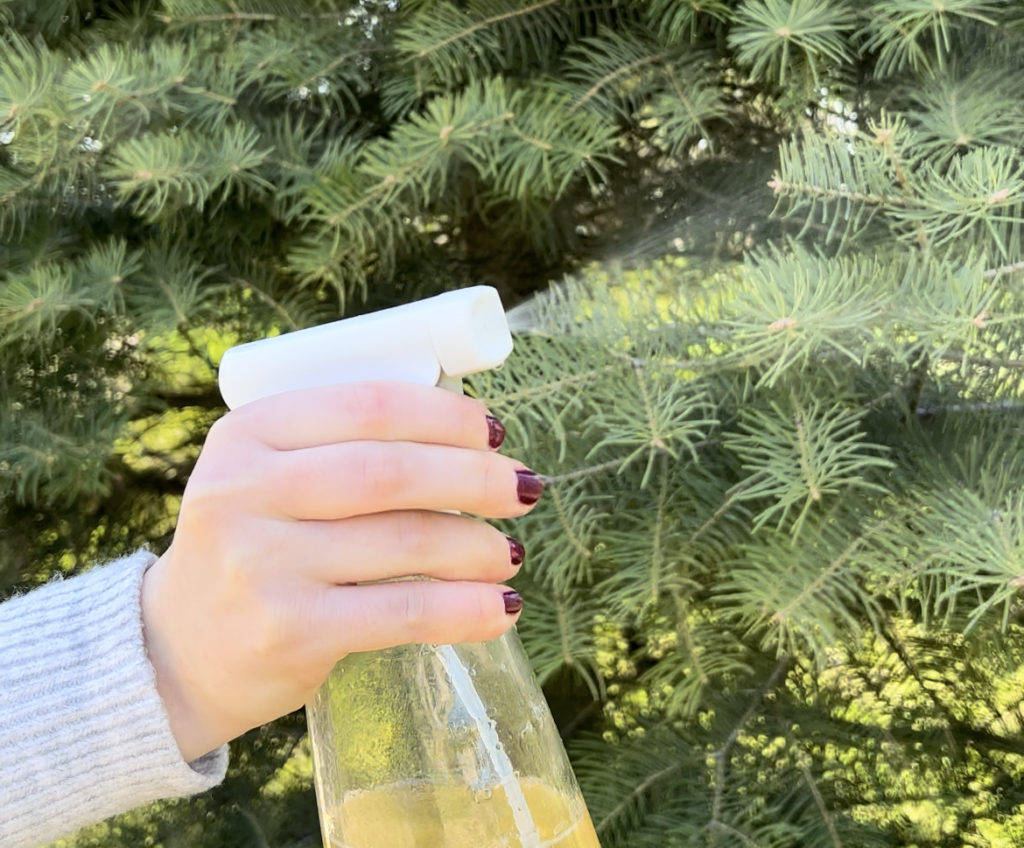
Some natural ingredients that are safe for humans are harmful to animals. If you have pets, take note of the following before using your homemade spray around them:
Never apply a repellent to your pet that is formulated for human use. If your pet spends time outdoors during mosquito season, speak with your vet about appropriate preventative options.
Natural repellents and DEET work differently, and the right choice depends on where you are and what you’re doing. Neither is universally better; they serve different situations.
Homemade repellents with essential oils and apple cider vinegar are a practical, skin-friendly option for low-risk everyday activities. They avoid synthetic chemicals, smell better, and are gentler for people with sensitivities. The tradeoff is durability. Natural sprays typically need reapplication every two to three hours.
DEET works by blocking mosquitoes’ ability to detect human scent, making it one of the most consistently effective repellents available. It lasts longer between applications and covers a wider range of biting insects, including ticks. Used correctly avoiding the eyes, mouth, and skin under clothing it is considered safe for most people, including children over two months of age.
The practical rule is straightforward: for backyard evenings, hikes, and casual outdoor time in low-risk areas, a natural bug spray is a reasonable choice. If you are traveling to a region where mosquitoes carry diseases like malaria, yellow fever, or Zika, the CDC recommends an EPA-registered (EPA stands for Environmental Protection Agency) repellent containing DEET.
In those situations, stronger and more reliable protection is worth it. Either way, staying protected from bugs is crucial, especially during mosquito season.
With this homemade insect repellent, you’re not just avoiding bites. You’re also taking a step towards a more natural and environmentally friendly way of living.
The repellent spray in this guide is a good start, but there are several other ways to reduce mosquito activity around you. Plant mosquito-repelling herbs like basil, catnip, rosemary, and lemon balm in outdoor living areas for passive, ongoing protection.
Citronella candles can add up to 50 percent extra protection when spending time outside. Wearing loose-fitting, long-sleeve clothing during peak mosquito hours, dusk and dawn, also makes a difference without any spray at all.
For children, lemon eucalyptus oil is one of the most effective natural options, though researchers caution against using it on children under three years of age. Witch hazel is another essential oil which repels mosquitos. For younger children, reducing the essential oil concentration in a homemade spray and applying it to clothing rather than skin is the safer approach.
If a stronger repellent is needed, the CDC considers DEET safe for children over two months of age when applied correctly, avoiding the hands, eyes, and mouth, and washing it off when back indoors.
Start by removing standing water anywhere it collects around the property. Make sure window and door screens have no tears or gaps, and consider running air conditioning instead of opening windows during peak mosquito season.
For persistent problems, mosquito traps that use carbon dioxide to attract and capture mosquitoes can help reduce the overall population in your yard over time. Getting rid of mosquitoes takes time after they’ve established, so keep at it.
For more how-to guides like this one, check out our other Camping articles.