Buying GuideArticle
The Ultimate Power Sander Buying Guide
If you plan on sanding or smoothing wood, you'll need a power sander. Find the right one to get with this buying guide.
Read More October 5, 2023 | Blain's Farm & FleetYou may have heard of power tools that now come with brushless motors. Now, find out what all the fuss is about!
Brushless motors have been around for over 50 years in industrial and manufacturing conveyor belt motors.
But it wasn’t until the 2000s that power tool manufacturers began producing brushless tools. In 2009, Makita released a brushless three-speed impact driver.
Other top-quality power tool brands, such as DeWalt and Milwaukee, also have lines of brushless power tools.
Brushed motors consist of four main parts: an armature, a commutator, magnets, and carbon brushes.
The armature is a copper component, which carries the main electrical current.
The commutator is attached to the armature. It’s used to reverse the direction of the electric current. A commutator makes a direct current.
As the motor becomes energized, an electrical current goes through the brushes. Brushes carry the current between stationary and moving parts in the motor. The brushes make contact with the commutator, delivering the current to the copper armature. These components power the tool in use.
Brushed motors are typically more reliable and fairly inexpensive. Power tools with brushed motors are also considered more durable. They don’t need any external components. If you have a tool with replaceable brushes, you can increase the lifespan of the motor.
However, there are some cons for brushed power tools. As you use more speed, the brushes create more friction, decreasing the amount of torque you can produce.
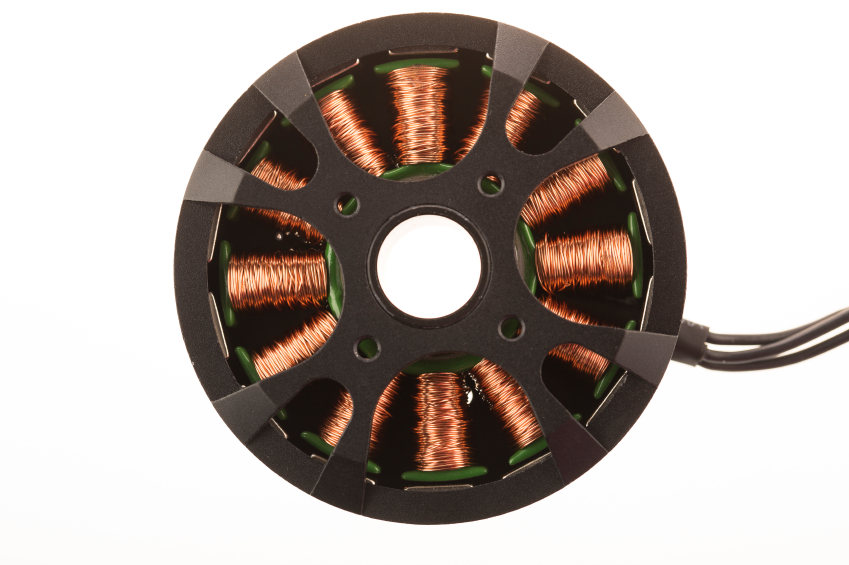
Brushless motors don’t have brushes, of course. But they also don’t have a commutator.
The magnet is on the conventional motor shaft, while the copper armature is around the shaft.
The magnet is on the outside of brushed motors. For a brushless motor, the magnets are on the inside.
A small circuit board replaces the commutator and brushes, sending energy to the copper windings of the armature.
Brushless technology power tools and their motors have many advantages. The lack of brushes causes less friction, saving energy. This creates a longer life for the motor, making it energy efficient and cost effective. This also gives the motor more power supply.
The brushless motor does not require airflow to cool down; it’s cooled by conduction. This means the motor can be fully encased in the power tool and protected from harmful debris, such as dirt.
Brushless motors are also less noisy than brushed motors. And they produce more torque both per weight and per watt.
Brushless power tools are more expensive than power tools with brushed motors. However, their power and long motor life can be worth the cost.