


How ToArticle
How to Prune a Tree
Routine pruning can help with tree growth and tree health. Learn how to prune a tree with the help of Blain's Farm & Fleet.
Read More July 7, 2016 | Blain's Farm & FleetJapanese beetles can be quite the menace for gardeners and homeowners alike. Their lifecycle consists of several stages, each requiring a specific approach to treating them.
The immature stage of the Japanese beetle—the white grub—typically has a three-year lifecycle. However, most of the damage to ornamentals and turf grass happens during the spring and fall of their second year. This is when grubs are present in the top inch of the root zone, heavily feeding on grass roots and thatch.
In the third year of the cycle, the grubs rise out of the soil as Japanese beetles. These beetles eat surrounding plants and lay eggs in the soil throughout the summer. These eggs eventually hatch into grubs, and the cycle begins again.
In this comprehensive guide from Blain’s Farm & Fleet, we’ll walk you through the necessary steps to tackle these pests at every stage of their life. From dormant grubs hidden beneath the soil to the feeding adults that wreck havoc on your plants, we’ve got you covered.

In the colder months, Japanese beetle grubs burrow deep into the soil and go dormant for the winter. During dormancy, grubs are not actively feeding, but they are preparing for their next phase. They reside a couple of inches below the soil surface, making them hard to reach with topical treatments.

As the weather warms up, grubs rise from their winter rest and begin feeding on the roots of grass and other plants, causing extensive damage. Look out for patches of dying grass that lift easily. Chances are, there will be white grubs underneath.
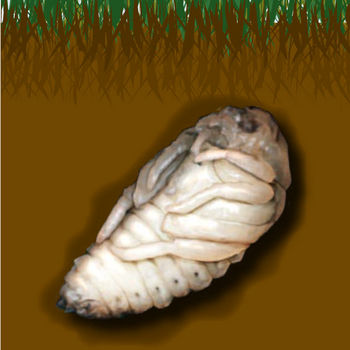
After the spring feeding period during the third summer of their life, grubs transition into the pupal stage. This is when they transform into adult beetles.
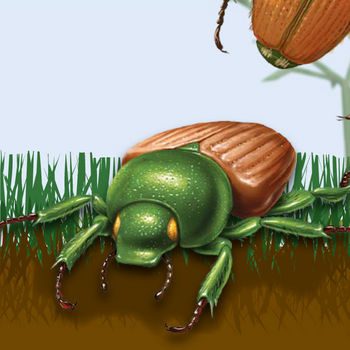
This is when adult Japanese beetles emerge from the soil and begin feeding on the foliage and flowers of over 300 plant species, leaving behind skeletonized leaves.
Adult Japanese beetles are quite distinctive once you know what to look for. They are about 1/2 inch long and have metallic blue-green bodies with copper-colored wings. They are most active from June through August.
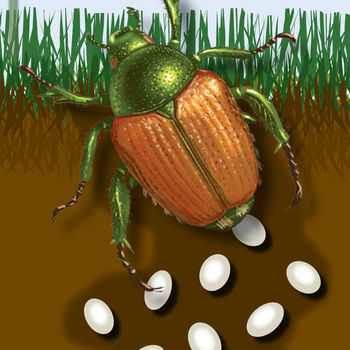
The adult beetle continues to feed, mate, and lay eggs in the soil and turf until up to 60 eggs are laid, starting the cycle over again.

The eggs hatch into grubs, which feed heavily on organic matter in the soil, including grass roots. This happens throughout the late summer and early fall, causing extensive damage.
Managing Japanese beetles and grubs is a cycle of vigilance and timely action. By understanding the lifecycle of these pests and using the appropriate strategies for each stage, you can protect your garden and lawn from damage.
Remember, the key to effective pest management is persistence and consistency. Take action today to enjoy a healthier garden tomorrow.


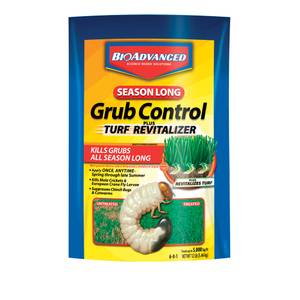

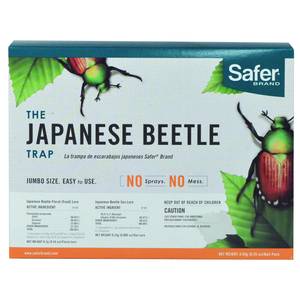






For more how-to guides like this one, check out our other Outdoor Maintenance articles.