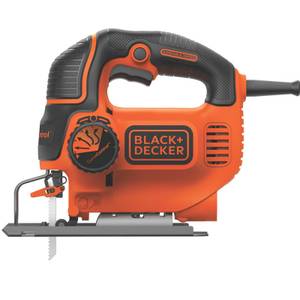
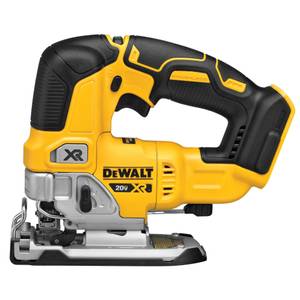
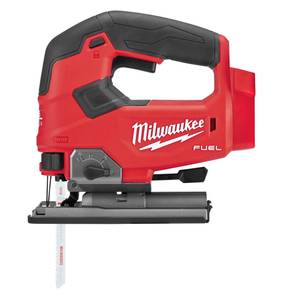
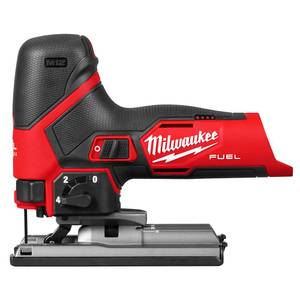
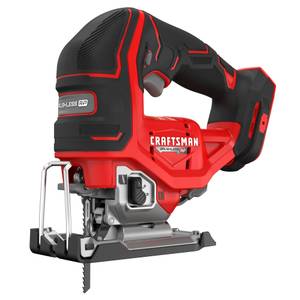
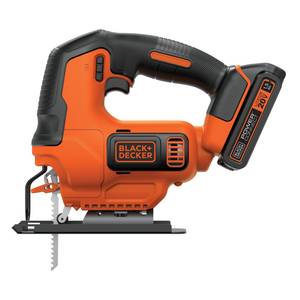
Find the best jigsaw to fit your needs.
No professional or do-it-yourselfer should be without a jigsaw. It’s a versatile tool that can make straight cuts, curved cuts, cross cuts, and plunge cuts. This can cut down the number of saws you need for your future projects. However, jigsaws can range in prices and varieties, which can make your buying decision feel overwhelming.
That’s why this guide from Blain’s Farm & Fleet is here to walk you through everything you need to know about buying a jigsaw. We’re here to help you choose a tool that will serve you well for years to come.
Common Jigsaw Uses
A jigsaw isn’t just a regular saw. It has a reciprocating blade that moves up and down, which allows you to cut everything from complex curves in wood to straight lines in metal. Jigsaws are easy to control, which makes them a favorite for precision work like cutting intricate shapes or small angles.
If you frequently work on home projects such as furniture, flooring, or crafts, a jigsaw can be very useful. And for professionals, it can be a reliable solution for a number of cutting needs. Some common jigsaw uses include:
- Cutting curved or decorative edges
- Making plunge cuts to start a cut in the middle of a surface
- Cutting thin materials like plywood and laminate
- Handling heavy-duty projects like cutting metal sheets or PVC
Jigsaws can either be corded or cordless. Each types has its own advantages depending on how you plan on using them.
Corded Jigsaws
Corded jigsaws plug directly into wall outlets and usually range between 3 and 8 amps. They are best suited for medium- and heavy-duty jobs. If you’re a construction or carpentry pro, you should have a good corded jigsaw in your arsenal.
Advantages:
- Consistent, high power suited for tough materials
- No need to change or recharge batteries
- Unlimited runtime as long as you have electrical access
Disadvantages:
- Needs an outlet nearby or long extension cord to work
- Cords can get in the way and limit you to a confined area
- Can be less convenient for outdoor projects or remote job sites
Corded Jigsaw Features to Look For
- Metal Gear Housing: You want to get as sturdy a saw as possible for heavy-duty use. A metal gear housing will protect the gears from whatever demanding jobs you throw at your saw and extend tool life.
- Rubber Cord: A rubber cord is much more flexible and easy to work with than a plastic one.
- Cord Storage: You’ll want to make sure that your corded saw has somewhere to wrap or coil the cord up to make it easier to transport.
- Lighted Plug: This will let you know at a glance if there is power to your jigsaw. This comes in really handy on the job site. It also allows you to identify your saw’s plug from a distance when you’re looking at an outlet or power strip with multiple tools plugged into it.
Cordless Jigsaws
Cordless jigsaws run on power from a 12-, 18-, or 20-volt battery. They are extremely portable, which is handy on larger job sites. They also eliminate the chance of tripping over or cutting through the power cord. Cordless jigsaws are best suited for light- and medium-duty use.
Advantages:
- No need for an outlet, giving you freedom to cut anywhere
- No cord to get in your way or cause safety hazards
- Great for small to medium projects, touch-ups, or repairs in remote locations
Disadvantages:
- You may need to stop cutting to change to charge batteries
- Slightly less power compared to corded models
- Higher initial cost when factoring in batteries and chargers
Cordless Jigsaw Features to Look For
- Convertible Grip: This allows you to switch the handle back and forth between a barrel style and D-style. This gives you a little more versatility and control when you’re cutting in a tight space or at an awkward angle.
- Auto-Stop Brushes: These will keep the saw from running when the brushes are worn out, which can protect your motor from damage.
- Brushless Motor: This will give your tool more power and a longer life by cutting down on friction. Check out our blog article on brushless power tools for more information.
Other Features to Consider
Regardless of whether you choose a corded or cordless jigsaw, there are some other features that are good to consider based on your needs.
- Motor Power: This will be an amp rating for corded jigsaws and a voltage for cordless ones. You can never have too much power. We recommend buying the saw with the most power that still fits within your price range. 5 amps or 18 volts should be enough for DIY use. For heavy-duty work, go with a 7 or 8 amp corded model or a 20-volt cordless one.
- Variable Speed Settings: This will allow you to control how fast and aggressive your cut is. It will allow you to handle cuts on a wider variety of materials and adjust to them. Deep cuts through hardwoods need higher speeds, while cutting metals usually takes a lower speed setting.
- Regulated Speed: This keeps the saw from slowing down when you cut harder materials. By maintaining a constant speed, the saw will cut better and more clearly. Jigsaw speed is measured in strokes per minute (SPM). Look for a saw with at least 2,500 SPM. This will be enough for almost any job.
- Orbital Action: This makes for more aggressive, efficient cutting. The orbital action allows the jigsaw to cut through harder materials. It will also keep it from binding. Higher-end saws have adjustable orbital action, which gives them better precision and versatility and allows them to cut through a wider range of materials.
- Laser Line: If you do a lot of straight cuts and ripping, invest in a jigsaw that has a built-in laser cutting line to guide you. This will help you get a perfectly straight cut or rip every time.
- Dust Blower: This will help clear away any sawdust or other debris from your cutting line, so you can see clearer.
- Dust Port: If you want to reduce the amount of post-job cleanup you’ll have to do, consider getting a jigsaw that can connect to an external dust collector or wet-dry vac. This will allow you to collect the sawdust while you saw.
- LED Lights: It’s hard to make a good cut if you can’t see. A light on the saw will help you see better and make cleaner, straighter cuts.
- Blade-Change System: Opt for a tool-free or quick-change blade system to make replacing jigsaw blades fast and reduce the chance of losing small parts in your workshop. This feature is particularly handy when switching between cuts on different materials.
To choose the right jigsaw, determine your needs and match them with the right features. Start by determining whether a corded or cordless option better fits your typical work environment. Then, look into other features that will impact your most common cutting tasks. The right jig saw will improve your cutting results and serve you reliably for years.
For more buying guides like this one, check out our other Tools articles.