Backyard bird-watching enthusiasts are always looking for ways to attract more birds onto their property. As you probably could have guessed, the quickest way to a bird’s heart is through the food you provide them. Learning about the different types of bird food each species prefers will help you have a successful bird watching season.
Picking the Right Bird Seed & Bird Food
Sunflower
Sunflower bird seed attracts a wide variety of birds to your backyard and are an affordable option.
It’s important to note that there are two different types of Sunflower Bird Seed – Black Oil Seed “Oilers” and Striped Seed. Oilers. Both types are easy for all seed-eating birds to crack open because of their soft shell whereas Striped Sunflower Seeds are much harder to open due to their thick shell. Unfortunately, birds are not the only animal attracted to Sunflower Seed. Squirrels love to ambush the bird feeder in search of their next meal. Luckily, we carry squirrel baffles and squirrel proof bird feeders to help keep these pests out.
Safflower birdseed contains a hard outer shell and is high in protein, fat, and fiber.
Safflower are the seeds from the annual safflower plant, Carthamus tinctorius. It’s a small, white seed high in protein, fat, and fiber. It’s made up of a thick, hard shell which deters some birds from choosing it. In fact, often times House Sparrows, European Starlings, and Squirrels steer clear from eating Safflower seed. It’s recommended that bird watchers use a hopper feeder for their Safflower Bird Seed.
Birds Attracted to Safflower Seed: Jays, Crows, Magpies, Nutcrackers, Cardinals, Grosbeaks, Pyrrhuloxias, Blackbirds, and Starlings
Cracked Corn
Cracked corn is one of the most common and forms of backyard bird food and contains a healthy amount of protein and fiber.
One of the most common and overlooked forms of backyard bird food is Cracked Corn. It’s readily available, affordable, and contains a healthy amount of protein and fiber! Plus, it doesn’t spoil easily, so it can be stored for a long period of time. Cracked Corn is created by grinding dry corn kernels into small pieces so that backyard birds can easily digest the finished product.
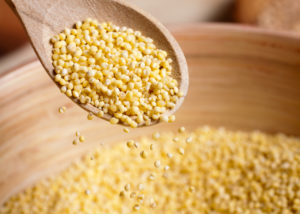
Millet is a small, tan lightweight seed that’s used in a lot of birdseed.
The most common form of Millet used for bird seed is the White Proso Millet. It’s a pale tan, lightweight seed that contains a lot of essential nutrients to help your backyard birds. Millet is a small, inexpensive grain that contains many more seeds in one bag than an equal size bag of Sunflower Seeds or Safflower Seeds.
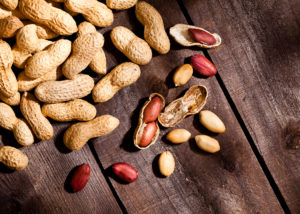
Peanuts are well-liked by a large variety of bird species and are sold in the shell or in pieces.
Peanuts are well liked by a wide variety of bird species, but also attract squirrels, raccoons, and other animals. You have the option of purchasing peanuts in a shell or broken into pieces. In-shell peanuts are popular with larger birds such as Jays, Ravens, Crows, Woodpeckers, and Grackles. However, all types of birds enjoy peanut chunks and chips. Keep in mind that you should never feed your birds flavored peanuts because they can cause serious health issues. Peanuts in a shell are often served in a platform feeder, and broken down peanuts are often served in a tube feeder.
Birds Attracted to Peanuts: Woodpeckers, Jays, Crows, Magpies, Nutcrackers, Towhees, Juncos, Sparrows, Buntings, Blackbirds, and Starlings
Suet
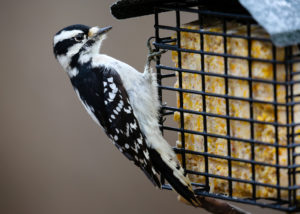
Suet is the perfect bird food to offer in the winter months. Suet is a fatty, high energy food that’s well-liked by a wide variety of birds.
Suet should only be offered during the winter months because it’s a fatty substance that will go rancid quickly when temperatures are above freezing. Plus, fat is a high-energy food source that will help the birds make it through the cooler temperatures. Suet comes from the fatty loins and kidneys in beef and is often combined with other key ingredients such as corn meal, peanuts, fruits, and dried insects.
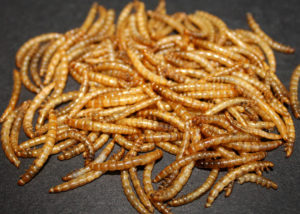
Mealworms are tiny, protein pack larvae of the Darkling Beetle. We carry a number of different bird feeds and suets that contain dried up mealworms.
Mealworms are tiny, protein packed larvae of a flightless insect called the Darkling Beetle. They can be purchased alive but are much easier to store and maintain when dried up. By feeding this insect source, you can attract a wide variety of insect-eating birds into your backyard. It’s recommended to provide Mealworms on a year-round basis because many of the bird’s natural food sources are depleted in late winter and early spring. Mealworms can be served alone or added to bird feed or bird suet.
Birds Attracted to Mealworms: Woodpeckers, Jays, Crows, Magpies, Nutcrackers, Titmice, Chickadees, Nuthatches, Wrens, Creepers, Robins, Bluebirds, Warblers, Tanagers, and Orioles
Nectar
Nectar is a sweet, energy-enriched liquid produced by a number of different flowers.
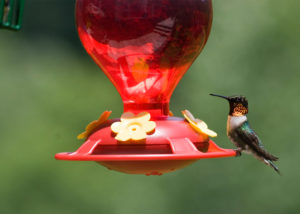
Nectar is a sweet, energy rich liquid that flowers produce to attract pollinators, such as insects and birds. Hummingbirds can’t resist the taste of nectar and have long, narrow beaks that are perfect for extracting. These birds are fascinating to watch as they hover over your feeder flapping their wings so fast that it makes a buzzing noise. You can find Nectar and Hummingbird Feeders at Blain’s Farm & Fleet!
Birds Attracted to Nectar: Hummingbirds
Nyjer or Thistle
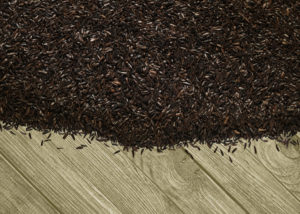
Nyjer is a small, black seed that comes from the African yellow daisy (Guizotia abyssinica).
Nyjer is a small, black seed that comes from the African yellow daisy, Guizotia abyssinica. It’s an oily, rich seed that’s preferred by many seed-eating bird species. Nyjer thistle seed is imported from overseas which causes the price to fluctuate based on import prices.
Birds Attracted to Nyjer: Pigeons, Doves, Finches, and Siskins