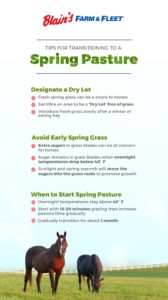
Learn about transitioning your horse to spring pasture with Nutrena and Blain’s Farm & Fleet.
As a horse owner, you work hard to provide your horses with what they need. Pastures seem all too natural to resist, but it’s important to understand the unique nutritional properties of early spring forage and its effects on your horse’s digestive system.
Horse care and horse feeding deserve a lot of attention to ensure that your horse stays happy and healthy. Getting the transition to spring pasture right is key.
Learn more about transitioning your horse to spring pasture in this article with Nutrena and Blain’s Farm & Fleet.
Designate a Dry Lot
This article will help guide you through the transition to spring pasture. It can be tricky, but with help from Nutrena and Blain’s Farm & Fleet, you’ll nail it!
If your horse survived the winter on hay, a fast introduction to rich spring grass can cause a shock to his or her digestive system. Transitioning too quickly to eating the spring growth isn’t ideal for your horse. Try to keep them off grass growing in the initial growth period by designating a “sacrifice” area or a dry lot.
The size of the dry lot will vary, but should be big enough to allow your horse to move freely and stretch his or her legs. Choose a size that works well for the amount of land you have.
The sacrifice area serves to protect your emerging pasture, while also allowing you an opportunity to ease your horse’s digestive tract onto new-growth grass.
If your horse is kept in a dry lot during this time, consider hand walking, lunging or additional work sessions. This will help keep them from becoming too fresh.
Avoid Early Spring Grass
As the strong spring sun warms the earth, the grass in your pasture emerges from its winter dormant state.
The first few blades have a critical job of transforming sunlight into food, that starts the growth of the plant for the rest of the season. This food is in the form of plant sugar (fructans) and is essential for the plant to grow into a productive pasture contributor for the remainder of the season.
When overnight temperatures are cool (generally 40°F), the stored energy created during the day is used to grow additional leaves and roots. Extra food not utilized overnight is stored in the plant tissues. If overnight temperatures drop below 40°F, the plant will not invest in growth and the sugars will remain in the leaves.
This is when the new grass is of concern for horses.
When to Start Spring Pasture
Once overnight temperatures consistently remain above 40°F, start acclimating your horse to the fresh spring grass. This is when the level of fructans in the grass are likely to be the lowest.
The transition to pasture should be slow and gradual, starting with a period of 15-20 minutes of grazing. Gradually increase until you have reached your ideal turnout length of time – this may take the better part of a month.
During this time, it’s important to monitor the output of your horse. Loose, unformed stools indicate digestive upset likely correlated to the increased fructans.
For horses with metabolic issues prone to digestive upsets, transitions should be made later in the growing cycle onto mature grasses. In addition to restricting time on pasture, a grazing muzzle can be used to further control intake.
Allowing the grass to grow and flourish, then gradually transitioning to grazing is an investment in your overall nutrition program.
This article was originally posted by Megan C. on horsefeedblog.com and has been updated from its original form. For more tips on taking care of your horses, you can check out Blain’s Farm & Fleet’s Farming Blog.
Bandages can be used to support a horse's legs in the stall, during transport or for injuries. Learn how to wrap a horse's leg with Blain's Farm & Fleet.
It's that time of the year again where we start to think about what our New Year's Resolutions will be, and we want to help you put a horsey spin on them!
Need to know how to remove a horseshoe but there is no time to call your local farrier? Learn how you can remove a horseshoe with our quick and easy guide.
When the temperature falls and the winds grow colder, you should be prepared with the proper gear, supplies and accessories to keep your horse healthy and happy during the upcoming months.