How ToArticle
How to Make a Chicken Dust Bath
A chicken dust bath is essential for keeping your flock happy and healthy. Create your own with just a few basic materials and easy steps.
Read More December 17, 2024 | Blain's Farm & FleetRaising turkeys can be an exciting and rewarding experience, whether you’re considering them for meat production, ornamental purposes, natural foraging abilities, or just as a new venture on your hobby farm. While they do generally require more care than chickens, they can bring significant benefits to your backyard or farm.
Each turkey breed comes with unique characteristics that makes them suitable for different purposes, so it’s important choose one that aligns with your goals. This guide from Blain’s Farm & Fleet will walk you through popular turkey breeds to help you make an informed decision.
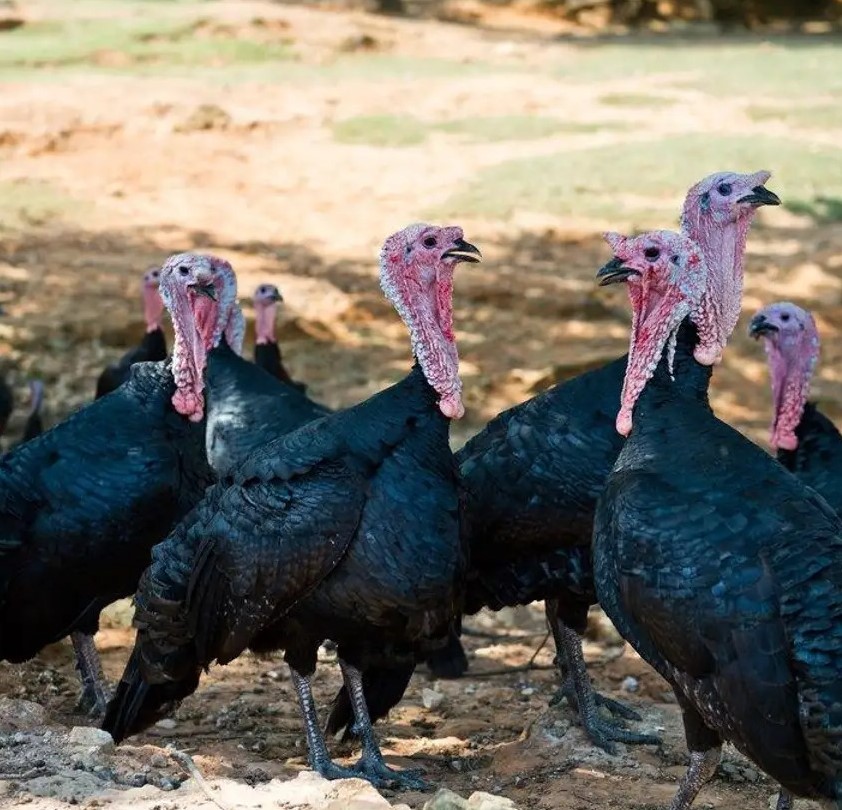
The Black Spanish turkey is a rare heritage breed that dates back to the 1500s when explorers transported it from Mexico to Europe before bringing it back to the Americas. Notably, the Black Spanish is one of the few domestic turkey breeds that reproduces naturally. As poults, their feathers are lighter in color but gradually develop into a striking, iridescent black by eight to nine months of age.
| Main Use | Egg Production | Egg Color |
|---|---|---|
| Meat Production & Ornamental | Poor | Off-White |

The Blue Slate turkey is a rare heritage breed believed to trace back to the Spanish Black turkey in the United States and the Norfolk Black in England. Highly regarded for its excellent foraging abilities, the Blue Slate is an ideal choice for backyard farms. These turkeys are capable of natural reproduction and are known to go broody.
The genetics of the Blue Slate turkey offer many unique breeding possibilities. Breeding two splash slates results in offspring that are exclusively splash slates, characterized by their ash-blue coloring with small black speckles. When two blue slates are bred together, all three color variations (blue splash, blue, and black) may appear in the offspring. Pairing a blue slate with a black slate typically produces only blue and black poults, while breeding two black slates generally results in entirely black offspring.
This color diversity, combined with the breed’s hardy nature, makes the Blue Slate turkey a rewarding choice for both farmers and breeders.
| Main Use | Egg Production | Egg Color |
|---|---|---|
| Meat Production & Ornamental | Poor | Off-White |
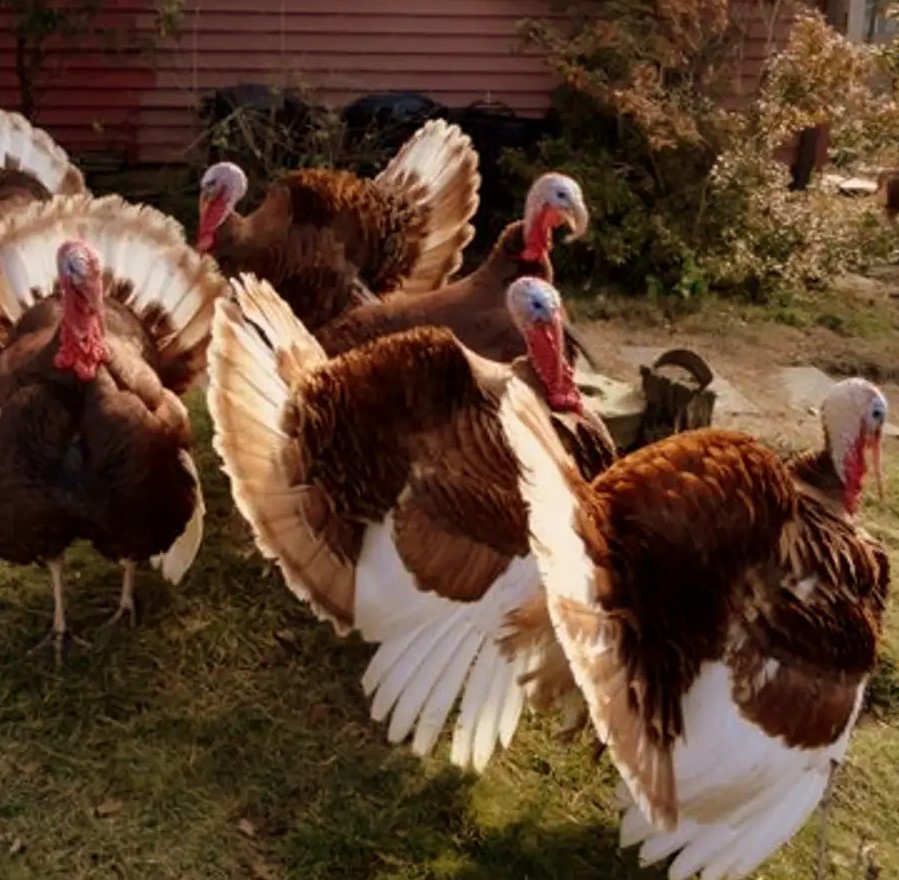
The Bourbon Red turkey is another rare heritage breed. Originally developed in Pennsylvania, it was brought to Kentucky alongside the long rifle and later gained its name from Bourbon County, where it became quite popular. Known for its strikingly beautiful color pattern, the Bourbon Red is an excellent choice for both farms and backyard flocks, offering a blend of practicality and beauty.
| Main Use | Egg Production | Egg Color |
|---|---|---|
| Meat Production & Ornamental | Poor | Off-White |

The Bronze Broad Breasted turkey originated in America and is often regarded as the largest and heaviest breed of its kind. It’s a great choice to raise for family meat production and has an excellent feed-to-meat conversion rate. However, because of their large size, the Bronze Broad Breasted turkey generally does not reproduce very well and they have a shorter natural lifespan than a heritage turkey.
| Main Use | Egg Production | Egg Color |
|---|---|---|
| Meat Production | Poor | Off-White |
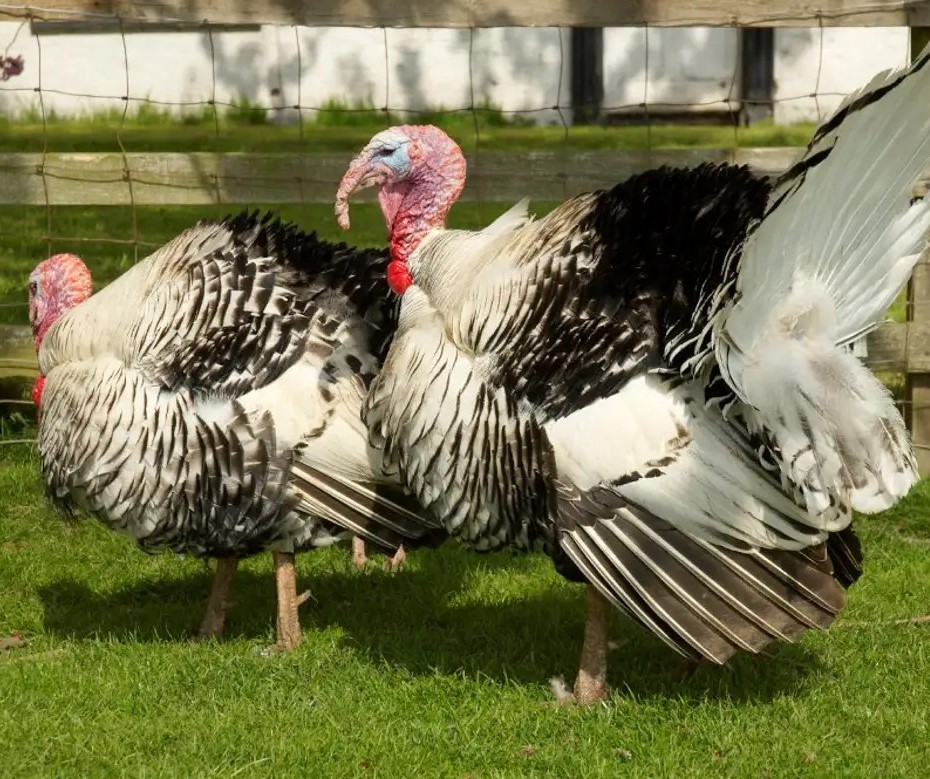
The Royal Palm turkey, a rare heritage breed, is known for its striking plumage and practical qualities. They are slightly smaller than other heritage turkey breeds.
Royal Palms are excellent foragers and thrive with minimal intervention. They also help control insect populations. Their natural ability to breed and tendency to go broody make them a valuable addition to any farm.
| Main Use | Egg Production | Egg Color |
|---|---|---|
| Ornamental | Poor | Off-White |

The White Broad Breasted turkey is the most common commercial eating turkey breed available today, prized for its size and meat production. As one of the largest turkey breeds, it has limited natural reproductive abilities, often requiring artificial insemination to ensure high hatchability rates.
Unlike heritage breeds, these turkeys have a shorter lifespan, as they are specifically bred for efficient meat production. Their exceptional feed-to-meat conversion ratio makes them a staple in the industry. For many Americans, the main course of their Thanksgiving feast is a Broad Breasted White turkey.
| Main Use | Egg Production | Egg Color |
|---|---|---|
| Meat Production | Poor | Off-White |
Raising turkeys is a rewarding experience, but success comes from choosing the right breed for your goals. Some breeds offer beauty and breeding potential for small-scale farmers, while others dominate in meat production with their efficient growth and high yield. With the right planning, turkeys can become a valuable and exciting addition to your farm.
For more buying guides like this one, check out our other Chickens & Poultry articles.